
What is actinic purpura?
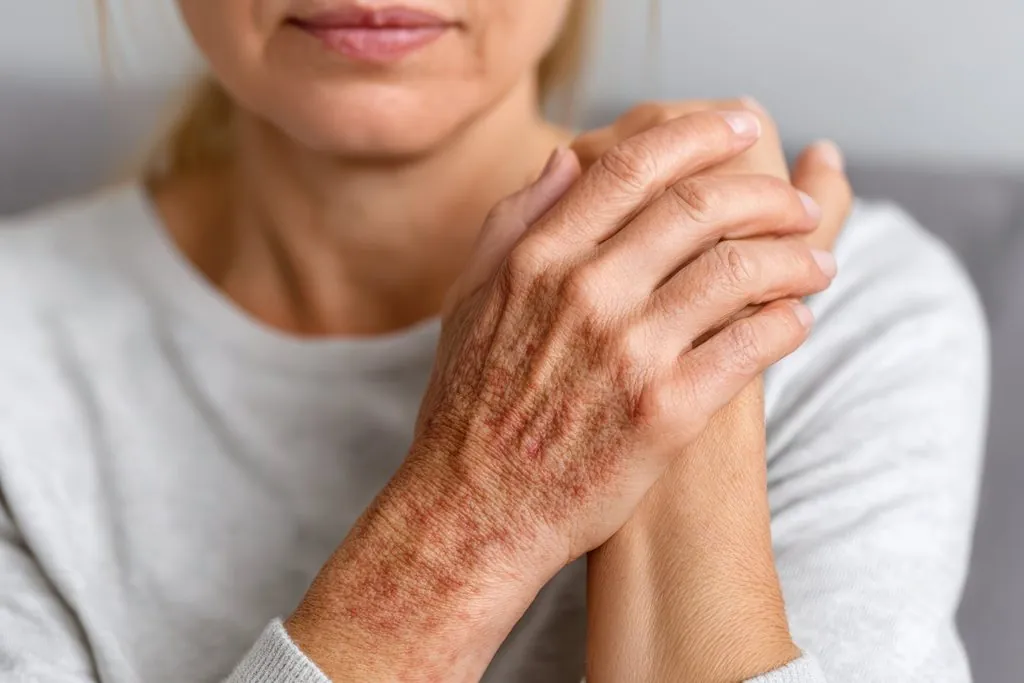
Actinic purpura is a skin condition in which small purple splotches or bruises form on the forearms and hands. This condition is also referred to as solar purpura, senile purpura, and Bateman’s purpura. The bruises start as flat, red blotches. Over time, they turn purple and darken a bit further before fading away. Actinic purpura differs from normal bruises in several ways. First, they are not usually caused by a knock or injury. They are also not tender and last much longer than normal bruises, often multiple weeks. They can also leave a faint brown stain on the skin after they fade.
What does actinic purpura look like?
Look for flat, irregular patches of dark red or purple, most often on the forearms and the backs of the hands. The surrounding skin is often thin, fragile, and sun-damaged, and it may tear easily.
What causes actinic purpura?
Aging and sun damage causes this condition. Years of sun exposure thin the skin and weaken the tissue that supports the small blood vessels beneath it. It is also more common when a patient is on blood thinners, including daily aspirin, or steroid medication. Minor trauma to the skin, such as scratching or poking, causes fragile blood vessels to tear under the skin and cause these discolorations.
Does actinic purpura go away?
Yes. Each bruise fades on its own, usually within one to three weeks, and it does not need treatment. New bruises tend to keep appearing, though, because the underlying skin stays thin and fragile. The goal of treatment is to strengthen and protect the skin so that fewer bruises form.
How is it treated?
Daily sunscreen and long sleeves help prevent further sun damage. Moisturizers may keep the skin more supple and trauma-resistant. Avoid soaps that strip protective oils on the skin surface. Minimize use of topical steroids (such as hydrocortisone) on areas of thin skin.
If you are currently taking blood-thinning medication, you may need to talk to your physician about safely lowering the dosage. Do not stop or change it on your own. A daily application of alpha-hydroxy acid cream or tretinoin cream will increase your skin thickness and limit the bruising. We can recommend the right product and strength for your skin. At Boise Dermatology & Medspa, we can also use non-invasive laser treatments to rejuvenate skin. Schedule an appointment today if you are interested in non-surgical aesthetic treatments for amazing skin.
When should you see a dermatologist?
Actinic purpura is harmless. It is worth scheduling a visit if:
- Bruises appear on your chest, back, legs, or face
- The bruises are painful or swollen
- You also notice nosebleeds, bleeding gums, or other unusual bleeding
- Bruising began suddenly or after starting a new medication
- Your skin tears easily or is slow to heal
These signs can point to something other than actinic purpura, and an exam will give you a clear answer.
Frequently asked questions
Is actinic purpura dangerous?
No. It is a cosmetic concern and not a sign of a bleeding disorder.
Is actinic purpura the same as senile purpura?
Yes. Senile purpura, solar purpura, and Bateman’s purpura are other names for the same condition.
What is the best cream for purpura on the arms?
Creams with alpha hydroxy acids or a prescription retinoid such as tretinoin can thicken the skin with consistent use. A dermatologist can match the product to your skin.
Can I prevent it?
You cannot undo past sun damage, but daily sun protection and regular moisturizing help protect the skin you have.
Request an appointment in Meridian, Idaho
Actinic purpura is harmless and will go away without treatment. But if you do have a concern that you would like to get checked out, schedule an appointment at Boise Dermatology & Medspa in Meridian. Dr. Naomi Brooks is a board-certified dermatologist who aims to keep her patients as healthy and informed as possible. If you would like to schedule an appointment with Dr. Brooks or her P.A. Sammy Verner, request an appointment online or give us a call at (208) 888-0660.